
The Minimalist Bathroom: 7 Products You Actually Need
Updated: Apr 6

Most bathrooms are doing too much.
Bottles multiply on the edge of the bath, old products linger "just in case", and drawers quietly fill with samples you never reach for. Before long, the room you start and end your day in feels more like a cupboard than a sanctuary.
A minimalist bathroom isn't about living with nothing. It's about choosing just enough: the essentials that truly serve your body, your routines and your peace of mind. As an artisan soap maker, I'm constantly thinking about how many products we really need around the sink, and how a single well-made bar can replace several bottles.
In this post, we'll look at why simplifying your bathroom helps your wellbeing, what the research says about clutter and stress, and how to create a calm, minimalist setup with just seven core products.
Why a Minimalist Bathroom Feels So Calming
It's not just an aesthetic preference. There is growing evidence that cluttered, chaotic home environments are linked with higher stress and lower wellbeing.
In short: when you clear away the visual noise, it becomes easier to breathe. The bathroom is a natural place to start - it's small, self-contained, and usually full of things that can quietly go.
Start with a Simple Question: What Do I Really Use?

As a soap maker, I see the same principle in skincare. When people strip their routine back to a few high-quality products, their skin often settles. There is less fragrance layering, fewer competing actives, fewer half-used bottles going off on the shelf.
Let's apply that logic to your bathroom.
The 7 Products a Minimalist Bathroom Really Needs
You can of course personalise this list, but as a starting point, a calm, minimalist bathroom can run beautifully on:
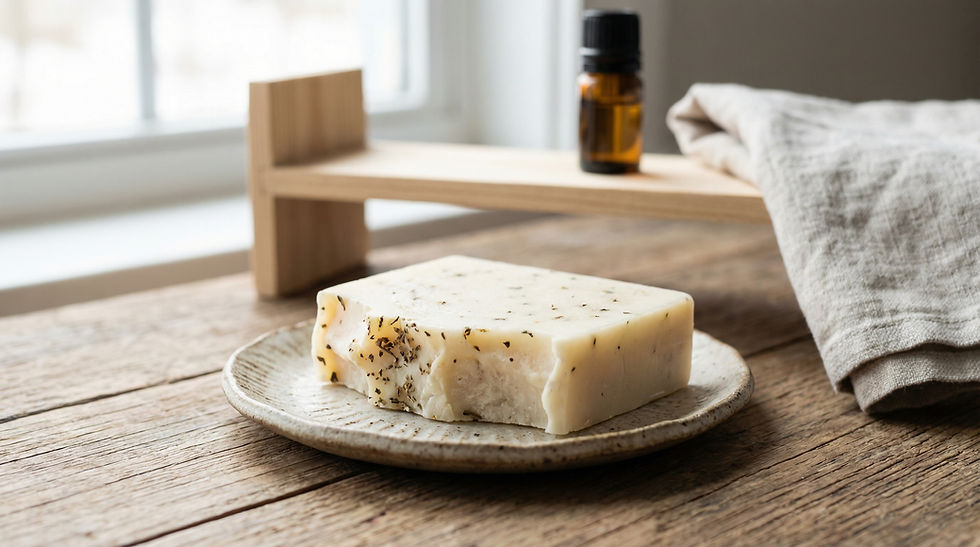
A good bar of handmade soap (or two at most)
A simple facial cleanser (if your face needs something different)
A moisturiser or body lotion
A shampoo (solid bar or bottle)
A toothbrush and toothpaste
A high-quality towel or two
One "joy" item — a candle, plant, or small object that makes you smile
Everything else is optional.
1. Handmade soap: the hardest-working product in the room
A well-formulated bar of handmade soap can replace several items:
Body wash
Hand wash
Sometimes even shaving foam and face wash, depending on your skin
Because cold-process soaps retain their natural glycerin, they help the skin hold on to moisture compared with many commercial syndet bars. Dermatology research shows that glycerin improves skin hydration and barrier function, making it a valuable ingredient in cleansers and moisturisers.
In our own range at The Humble Shepherd, moisturising blends are deliberately super-fatted to leave a small cushion of un-saponified oils. If you'd like to understand how this works, you might enjoy our post on glycerin in handmade soap and why it stays in the bar, or our moisturising bar soap ingredient guide.
2. A gentle facial cleanser (if needed)
Not every face tolerates bar soap, especially if you are using strong actives. If your skin is particularly sensitive, rosacea-prone or acne-prone, a separate, gentle facial cleanser can be helpful.
If you prefer to minimise plastic, a solid facial bar formulated for sensitive skin (rather than a basic body bar) can also work well.
3. One moisturiser to rule them all
Instead of separate hand cream, body lotion and "special" foot cream, a single, fragrance-light, rich moisturiser can often serve for everything from shins to knuckles.
I tend to recommend:
For normal-to-dry skin: a lotion with plant oils and glycerin.
For very dry skin: a thicker cream or balm in a small jar (which you'll actually finish).

4. Shampoo (and possibly conditioner)
Hair is personal, of course. But many of us keep old half-bottles for years. A minimalist bathroom aims for:
One shampoo that legitimately suits your scalp and hair
Conditioner only if your hair needs it
5. Teeth: one of the few non-negotiables
Toothbrush and toothpaste stay. NHS guidance on preventing tooth decay is very clear that twice-daily brushing with fluoride toothpaste significantly reduces dental problems over a lifetime.
From a minimalist perspective, you simply choose the brush style you like and stick with it.
6. Towels that actually dry
Instead of a stack of tired towels, a minimalist bathroom makes space for:
One bath towel per person in rotation
One hand towel
Quality beats quantity here. A couple of well-made cotton towels that you enjoy using are better than a cupboard full you never reach for.
7. One "joy" item
Minimalism isn't about stripping all personality away. In Denmark, the concept of hygge is all about small, comforting touches that make everyday life feel softer. Hygge is often defined as "deep contentment, comfort and connection in simple, everyday moments", as explained in a guide to the Danish art of cosy living at home.
In your bathroom, that might be:
A small plant on the windowsill
A handmade ceramic dish for your favourite soap
A candle you only light on Sunday evenings
The point is that this object earns its place.
A Simple Process for Decluttering Your Bathroom
You don't need to empty the room Marie-Kondo style if that feels overwhelming. A gentler approach can still be effective:
Group by category: bring all soaps together, all shampoos together, and so on.
Choose your favourite one or two in each category.
Check expiry dates and throw out anything clearly off or irritating your skin.
Create a "use up" box for still-good items you genuinely want to finish.
Donate or recycle suitable unopened products where possible.
Your bathroom is a perfect candidate.
Where Handmade Soap Fits In
From The Humble Shepherd's point of view, a minimalist bathroom is a natural home for handmade soap:
One bar at the sink, one in the shower — each carefully chosen for your skin and your scent preferences.
No plastic bottles, no synthetic fragrance cloud, just simple, skin-kind bars.
If you're building a minimalist routine and would like to know when new small-batch soaps are available, you can join our waiting list on The Humble Shepherd Co. homepage by popping your email into the newsletter box. That way, you can keep your bathroom simple and still enjoy variety over the year.
Frequently Asked Questions: Minimalist Bathroom Essentials
1. Won't a minimalist bathroom feel too bare?
Not if you keep one or two items of warmth and personality. Hygge-inspired bathroom design emphasises warm textures, soft lighting and natural materials rather than clutter. The aim is calm, not clinical.
2. Is it hygienic to use bar soap for hands and body?
Yes, for most households. Studies have shown that bar soap does not transfer harmful levels of bacteria between users, provided it can dry between uses. Public health bodies continue to emphasise that the important factor is proper handwashing technique. The NHS outlines clear steps in its guidance on how to wash your hands effectively with soap and water.
3. How do I stop clutter creeping back in?
Two simple rules help:
Only buy replacements when something is genuinely nearly finished.
For every new product that comes in, one goes out.
Psychologists studying household chaos and stress have shown that reducing environmental chaos can lower negative emotions and physiological stress. Keeping the bathroom simple is one easy way to protect that sense of calm.
4. What if my partner or children have different needs?
Minimalism doesn't mean everyone sharing the same shampoo. It means being intentional. Perhaps each person has:
One soap they love
One hair product that genuinely suits them
You can still store these neatly and avoid multiplying "just in case" products.
Why Natural Soap Is the Foundation of a Truly Minimalist Bathroom
The minimalist bathroom is built on a simple principle: fewer products, each doing its job exceptionally well. When you reduce clutter on your bathroom shelves, you are forced to choose items that genuinely earn their place. Natural soap bars are almost always the first product that survives this edit, and for good reason. A single high-quality handmade bar can replace body wash, hand soap, and in many cases a shaving product or gentle facial cleanser. Where a stocked bathroom might contain ten or fifteen products, each with its own plastic bottle and its own set of synthetic preservatives and stabilisers, a well-chosen soap bar does the work of several while taking up a fraction of the space.
The environmental case for switching to bar soap aligns naturally with minimalist values. Liquid body washes and hand soaps are typically 60 to 80 percent water by weight. That water is packaged in plastic, transported across long distances, and then diluted again by the consumer at the point of use. A solid bar contains no unnecessary water, meaning you are buying concentrated product. The packaging is almost always paper or card, compostable in a home bin rather than dependent on recycling infrastructure. In a minimalist bathroom, where every object has a clear purpose, a bar of natural soap makes more sense than a plastic bottle on every count.
There is also a quality argument that the minimalist ethos naturally supports. When you are not buying ten mediocre products, you have the budget to buy one or two excellent ones. A handmade natural soap crafted with cold-process technique, premium plant oils, and properly cured over four to six weeks is a meaningfully better product than a commercial bar or liquid soap. It retains its naturally occurring glycerin, which draws moisture to the skin. It is formulated to clean without disrupting the skin's acid mantle. It is often scented with pure essential oils rather than synthetic fragrance. Choosing quality over quantity is, in the end, what minimalism is actually about.
Simplifying Your Bathroom Routine Without Compromising on Results
The most effective minimalist routines strip back the steps without stripping back the outcomes. In practice, this means identifying which products in your current routine are genuinely doing something and which are simply filling a slot you have been conditioned to think you need. For most people, a morning routine that includes a thorough cleanse with a quality natural bar, followed by a single moisturiser and SPF, covers the essentials more effectively than a seven-step system built on products with overlapping functions. The key is choosing each remaining product with intention, rather than accumulating gradually.
For the body, a single natural soap bar typically replaces multiple products. A well-superfatted bar with shea butter and olive oil cleanses while conditioning, making a separate body lotion unnecessary for many people, particularly during summer months. In winter, applying body oil or butter to slightly damp skin after a shower and following with a natural bar at the next wash maintains hydration effectively without a shelf full of seasonal body products. Hair is the one area where bar soap is less universally interchangeable: solid shampoo bars are excellent for many hair types, but those with very fine hair, chemically treated hair, or hard water may find them more challenging. Experimentation here is worthwhile, but it is reasonable to keep one liquid shampoo if bars do not suit your hair.
The bathroom habits that accumulate most quietly are the ones tied to marketing cycles: the limited-edition shower gel, the seasonal hand cream in a new scent, the travel-sized products collected and never used. A minimalist bathroom benefits from a decision made once and maintained: one soap bar, one moisturiser, one shampoo. When a product runs out, it is replaced with the same thing or with a deliberate upgrade based on experience, not impulse. This kind of intentional routine is actually cheaper over time than constant purchasing of new products, and it creates the cognitive clarity that minimalism promises: knowing exactly what you have and why it is there.
Sustainable Swaps That Remove Plastic Without Removing Convenience
The minimalist bathroom and the sustainable bathroom overlap almost entirely, which means the practical steps for achieving one also accomplish the other. The most impactful single swap available to most people is replacing liquid soap with a natural solid bar. According to research from the environmental sector, consumers use approximately six to seven times more product per wash with liquid soap than with a bar, largely because pump dispensers and squeeze bottles make it easy to overuse. A quality solid bar, used properly, lasts considerably longer per gram of product and generates a fraction of the packaging waste. If you wash your hands ten times a day, as recommended during cold and flu season, this swap adds up to a meaningful reduction in plastic and product consumption across a year.
Beyond soap, the bathroom offers several other high-impact swap opportunities that align with minimalist principles. A bamboo or compostable toothbrush takes up the same space as a conventional one. A safety razor with replaceable steel blades produces far less waste than disposable plastic razors and, after the initial investment, is cheaper per shave. Shampoo bars eliminate the need for a plastic bottle entirely and, for those whose hair suits them, perform as well as or better than liquid alternatives. Reusable cotton rounds replace disposable make-up wipes. A ceramic or stainless steel soap dish replaces a plastic one and lasts indefinitely. None of these swaps require a radical change in routine; they simply replace the item you already use with a version that generates less waste.
For those building a minimalist bathroom from scratch or doing a deliberate edit of an existing one, the most useful starting point is a full inventory. Take everything out from under the sink and off every shelf. Group items by function: cleansing, moisturising, haircare, oral hygiene, grooming, first aid. Identify what you actually use regularly, what you have kept out of vague obligation, and what has been duplicated across multiple products. Most people find they can reduce their bathroom products by half without losing anything they genuinely use. What remains should be of the highest quality you can find, chosen for function and sustainability in equal measure. A natural handmade soap, a reliable moisturiser, and a thoughtful haircare product is not a deprivation: it is a well-curated routine.
Frequently Asked Questions About Natural Soap in a Minimalist Bathroom
Q: Can one bar of natural soap really replace multiple bathroom products?
A: For many people, yes. A well-formulated superfatted natural bar can serve as a hand soap, body cleanser, and gentle facial wash in one. Some people also find that a bar designed for the face doubles effectively as a shaving soap with a good shaving brush. The key is choosing a bar formulated with skin type in mind: a high-shea or high-olive bar works well across multiple applications without being too stripping for the face or too conditioning for the body. Start by consolidating hand and body cleansing first, then experiment with facial use once you have found a bar you trust.
Q: Does natural soap work well in hard water areas?
A: Hard water can affect how natural soap lathers, as the minerals in the water react with the soap and reduce foam. This does not mean the soap is not cleaning; it simply means the lather is thinner than it would be in soft water. A few adjustments help: use warm rather than cold water, wet the bar thoroughly before applying, and consider a higher-coconut formulation, as coconut oil-based soaps tend to lather more effectively in hard water than olive oil-heavy bars. A small amount of apple cider vinegar diluted in water used as a final rinse can also help neutralise the effects of hard water on both skin and hair.
Q: How do I store a soap bar in a minimalist bathroom without clutter?
A: A well-draining wooden soap dish or a stainless steel soap rack is all you need. Avoid plastic soap dishes with ridges that trap water, as prolonged moisture contact softens the bar unnecessarily and accelerates waste. A magnetic soap holder is an elegant solution for truly minimal aesthetics: the bar attaches via a small embedded magnet and sits suspended in the air, drying rapidly between uses. If space is very tight, a small hook-and-loop soap net (essentially a small cotton or sisal bag) hung from the shower head or a tap is a functional zero-footprint option. Whichever system you use, the goal is the same: allow air to circulate around the bar so it dries between uses.
Q: Is switching to natural soap enough to make a bathroom genuinely sustainable?
A: It is a very good start, but sustainability in a bathroom context is cumulative. Switching to a natural soap bar addresses packaging waste, ingredient provenance, and product concentration in one move. Pairing that with a bamboo toothbrush, a safety razor, and shampoo bars extends the impact significantly. The most sustainable bathroom is one where every product has been chosen deliberately for longevity and low environmental footprint, packaging is plastic-free wherever possible, and products are used fully before being replaced. No single swap is sufficient on its own, but soap is a logical and high-impact first step because it is a daily-use product with a clear, better alternative readily available.


Comments